Helical pile & screw pile installation
HELICAL AND SCREW PILES
FOR CAPE BRETON.
A practical foundation option for decks, porches, cabins, additions, tourism structures and difficult-access sites across Cape Breton, Nova Scotia.
LOCAL SERVICE
Victoria County and Cape Breton projects
COMPACT ACCESS
A smaller equipment footprint for tight sites
PROJECT-LED
Pile selection and requirements matched to the structure
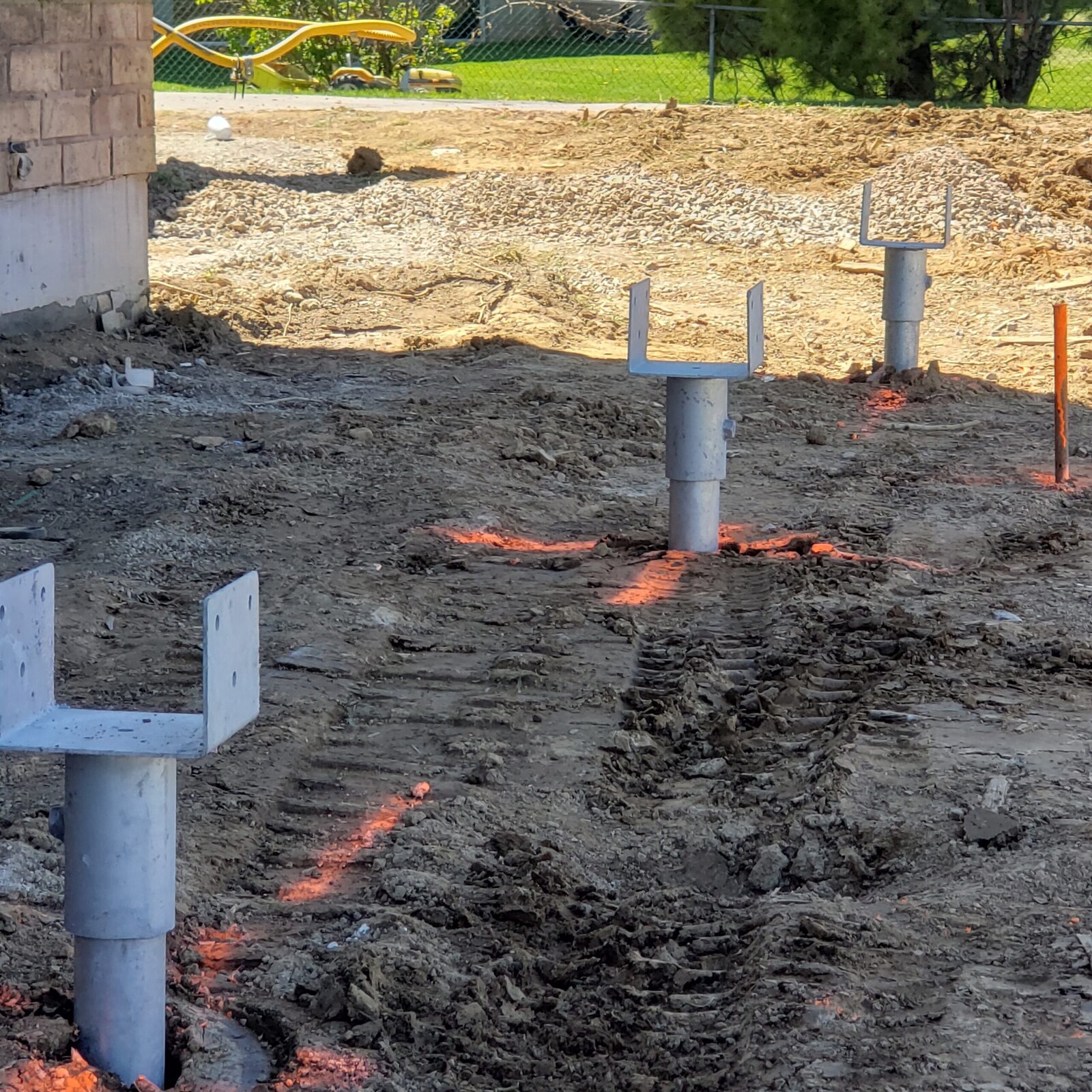
Helical foundation components: installed piles and brackets prepared for the structural handoff.
One system. Two common names.
WHAT ARE HELICAL OR SCREW PILES?
Helical piles—often called screw piles—are steel foundation elements installed into the ground with rotating equipment. The helical plates advance through the soil while the pile shaft transfers structural loads to suitable bearing material.
For the right project, they can reduce broad excavation, exported spoil, concrete work and disruption around the structure. They can be especially useful on wooded properties, changing grades and established sites where access and cleanup matter.
They are not a one-size-fits-all answer. Structure, loads, soil, rock, frost conditions, drainage, access, pile system, engineering and local approvals all affect the design and installation approach.
Built around the site
WHY SHORELINE FOR CAPE BRETON PILE WORK?
Foundation work gets easier when the installer understands access, grade, drainage and the work that has to happen before and after the piles go in.
01
DIFFICULT ACCESS
Compact equipment helps reach sites where larger foundation machinery or broad excavation would be disruptive.
02
SITEWORK THINKING
We consider access, grading, drainage and excavation alongside the foundation installation.
03
BUILDER COORDINATION
Pile layout, caps, connection details, work sequence and handoff are reviewed against your project requirements.
04
LOCAL TERRAIN KNOWLEDGE
Cape Breton sites can change quickly from organic soil to glacial material, wet ground or shallow rock. Review comes before promises.
Common applications
FOUNDATIONS FOR THE STRUCTURES THAT MAKE A PROPERTY WORK.
Suitability is confirmed project by project. Typical conversations include:
DECKS & PORCHES
New decks, covered porches, stairs, landings and outdoor living structures.
CABINS & BUNKIES
Small buildings and accessory structures where an engineered pile system is appropriate.
ADDITIONS
Selected home and cottage additions coordinated with the existing structure and new design.
SHEDS & GARAGES
Outbuildings and light structures with defined loads, layout and connection requirements.
TOURISM STRUCTURES
Platforms, domes, boardwalk elements and specialized guest amenities on sensitive or remote sites.
BRIDGES & VIEWING DECKS
Trail bridges, overlooks and public-use structures when helical support is specified.
Shoreline project example
A SPECIALIZED FOUNDATION FOR A DISTINCTIVE ACCOMMODATION.
At an ongoing coastal tourism development near Ingonish, Shoreline completed the sitework and helical-pile foundation components supporting a round platform for a geodesic dome.
The approach helped fit a specialized structure into a wooded site while preserving more of the surrounding character. It also shows why foundation installation should be planned with access, grade, drainage, structure and the next construction stage in mind.
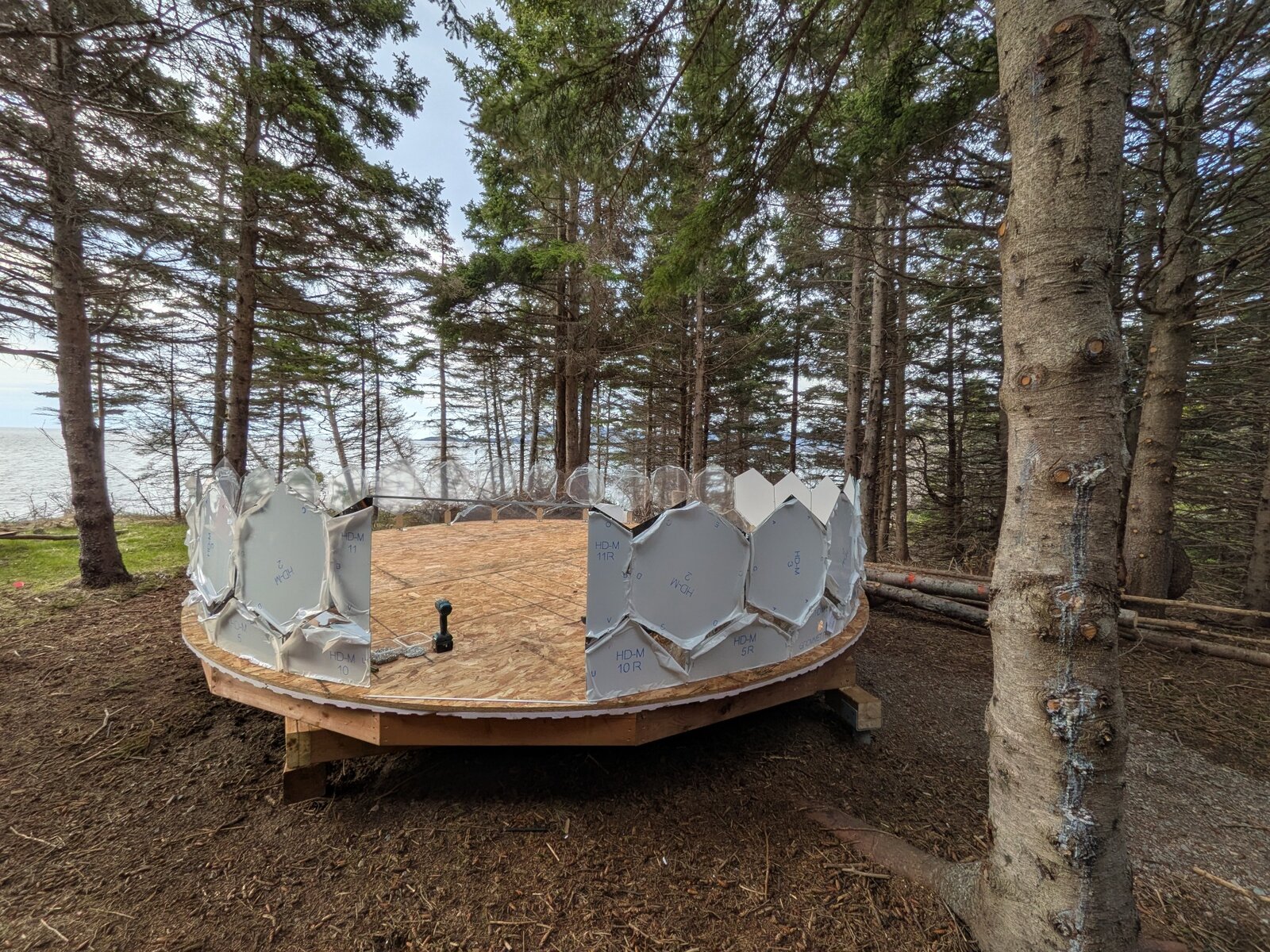
DURING CONSTRUCTION
Sitework and round platform foundation components taking shape.
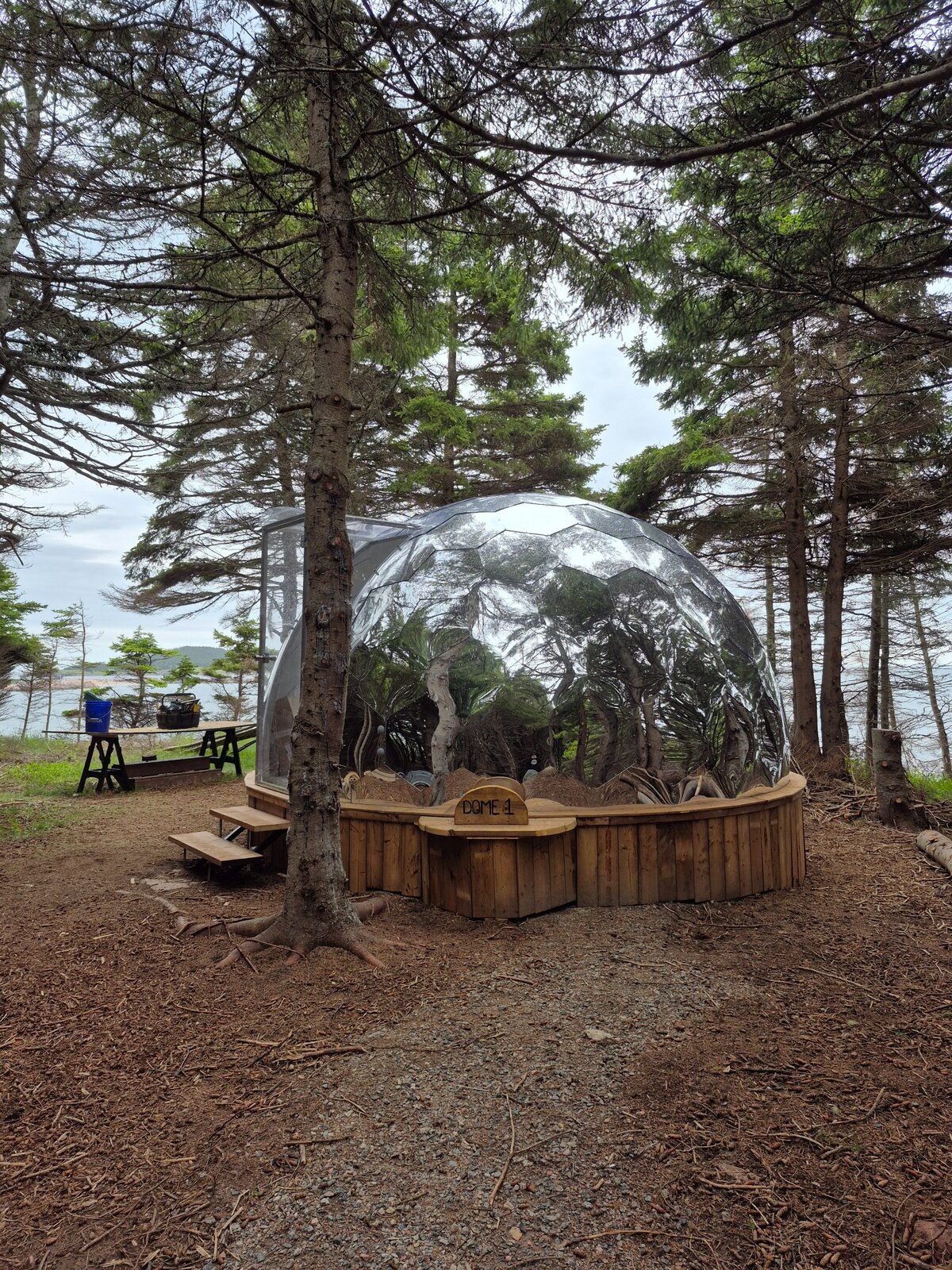
COMPLETED STRUCTURE
The finished accommodation set into the wooded coastal property.
See the system in use
FROM SMALL DECKS TO SUBSTANTIAL PORCHES.
These photographs were supplied by our helical-pile vendor.
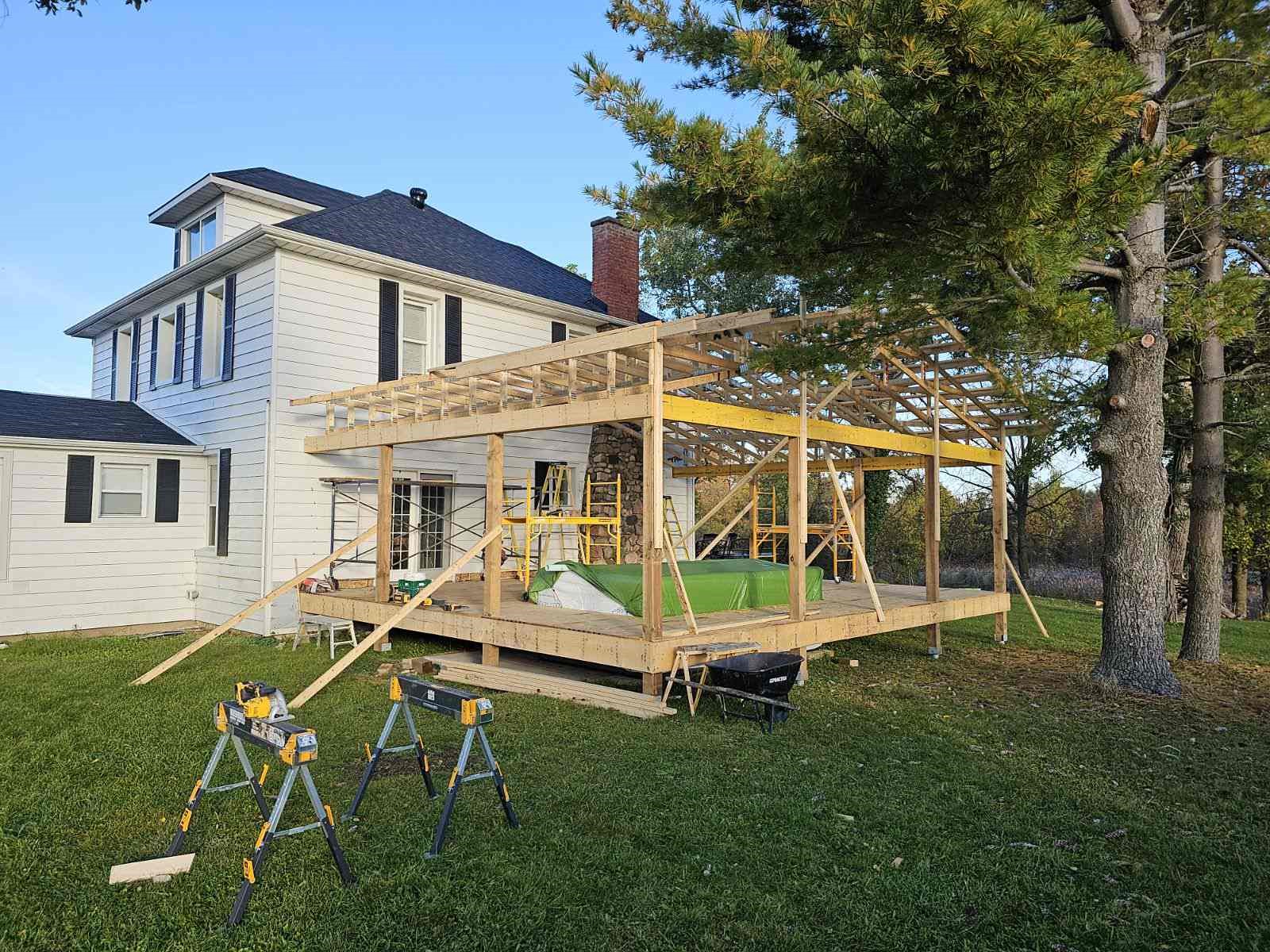
VENDOR-SUPPLIED PROJECT EXAMPLE
Helical support beneath a large covered porch structure.
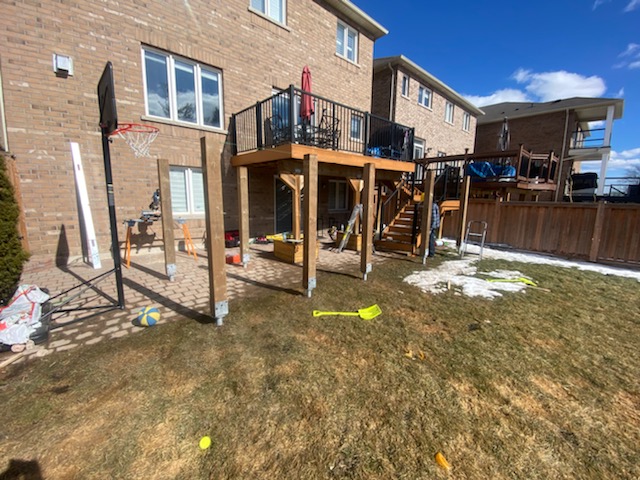
VENDOR-SUPPLIED PROJECT EXAMPLE
Helical support beneath a raised residential deck.
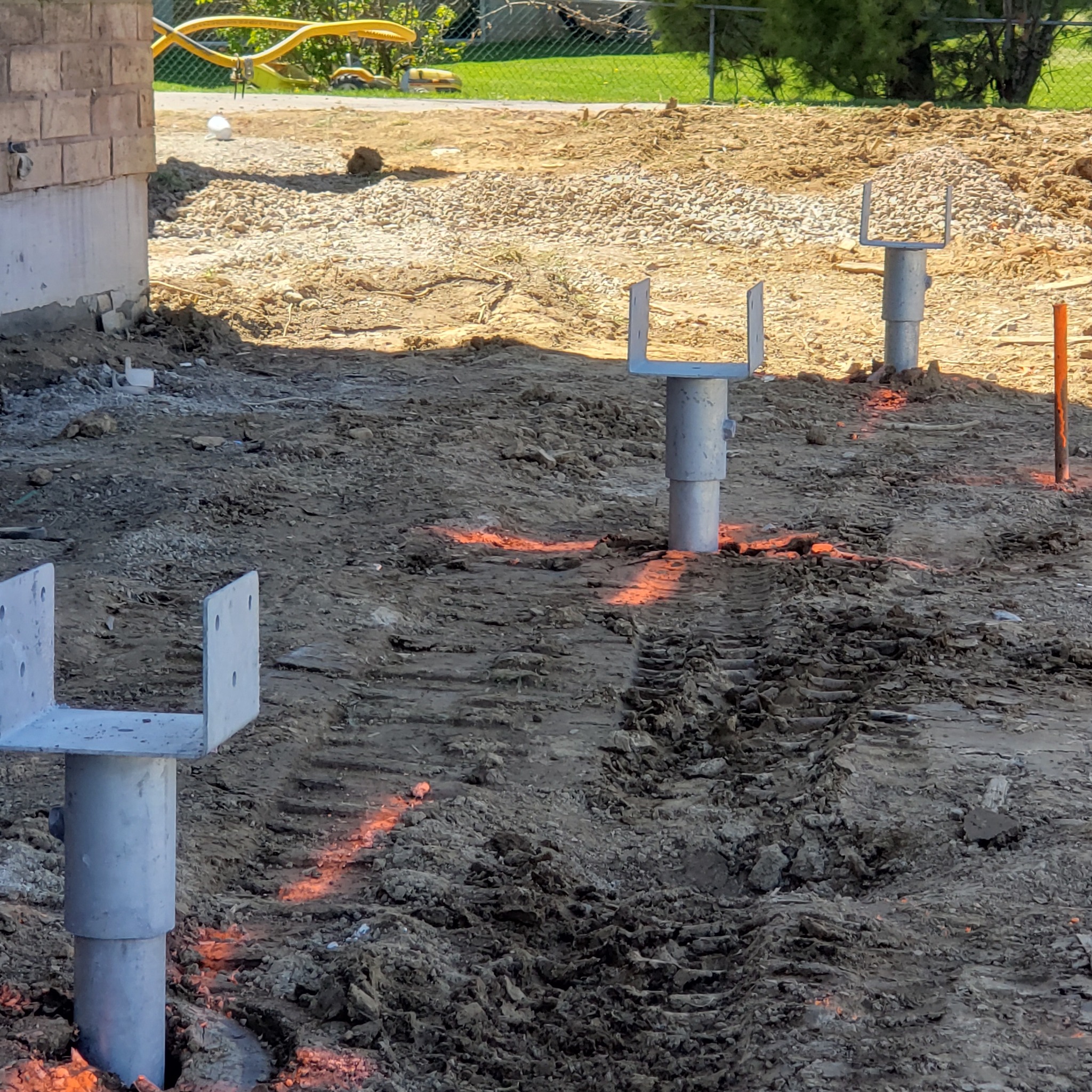
Installed to the project requirements
FOUNDATION WORK IS PART OF A STRUCTURAL SYSTEM.
Pile locations, type, depth, extensions, caps and connections have to support the actual structure—not a generic sketch. Installation criteria and documentation also depend on the selected pile system and accepted project requirements.
Where engineering or inspection is required, Shoreline coordinates field access, layout, installation and records with the appropriate project team. Structural design, certification and approval remain with the qualified professionals and authorities responsible for the project.
Image: vendor-supplied system example.
A clear installation path
FROM FIRST SITE REVIEW TO BUILDER HANDOFF.
01
PROJECT REVIEW
Share your project location, structure, drawings or dimensions, access photos, timing and known permit or engineering requirements.
02
SITE & ACCESS
Review grade, working room, services, vegetation, drainage and any known soil or rock conditions.
03
PILE REQUIREMENTS
Confirm layout, pile system, caps, connections, engineering, installation criteria and documentation where required.
04
INSTALLATION
Prepare access and layout, install the piles to the accepted requirements and address field conditions through the proper project team.
05
HANDOFF
Complete required records or inspection steps and leave the builder a clear foundation interface for the next stage.
Cape Breton conditions
GROUND CONDITIONS DECIDE WHAT WORKS.
Cape Breton is not one uniform soil profile. A single project can encounter fill, wet ground, organics, glacial till, cobbles or shallow rock. These conditions may affect pile selection, installation depth, layout, equipment access and whether a different foundation approach makes more sense.
Rock or early refusal does not automatically produce the same answer on every site. The correct response depends on the structure, system and accepted design requirements.
Structure first
ENGINEERING, PERMITS & DOCUMENTATION.
Pile locations, loads, shaft and helix configuration, caps, connections and installation criteria have to suit the actual structure. Where engineering, permits or inspection are required, Shoreline coordinates its work with the appropriate drawings, professionals and authorities.
Structural design, certification and approval remain with the qualified professionals and authorities responsible for the project.
Budgeting honestly
WHAT AFFECTS HELICAL PILE COST?
A useful quote needs more than a pile count. We review the complete installation conditions before pricing the work.
- Structure and loads: what is being supported and the accepted design requirements.
- Number, type and length of piles: including extensions, caps and connection details.
- Ground conditions: soil profile, water, obstructions, rock or refusal risk.
- Access and mobilization: travel, slope, width, overhead clearance and site preparation.
- Layout and coordination: survey controls, existing services, builder sequence and inspection requirements.
- Related sitework: clearing, excavation, grading or drainage needed to make the installation practical.
For the fastest review: send the address, project description, dimensions or plans, site photos and target schedule.
pleaseLocal coverage
HELICAL PILE INSTALLATION ACROSS CAPE BRETON.
Shoreline Dirtworks is based in Victoria County and reviews projects throughout Cape Breton. Primary areas include Baddeck, Ingonish, St. Ann’s, the North Shore and Cape North, with other Cape Breton locations considered by project scope and schedule.
If your site is remote, steep, wooded or difficult to reach, please include access photographs with your inquiry.
PLANNING MORE THAN THE FOUNDATION?
Driveways, drainage & site work →
Access, excavation, grading and water management around the build.
Tourism property development →
Site development for cabins, accommodations, trails and guest amenities.
View Shoreline projects →
See a range of work completed across Cape Breton.
Straight answers
HELICAL PILE QUESTIONS.
Are helical piles and screw piles the same thing?
The terms are often used interchangeably. Both generally describe steel foundation shafts with one or more helical plates that are rotated into the ground. The specific product, shaft, helix, cap and installation criteria still need to match the project.
Do helical piles work in rocky Cape Breton ground?
Sometimes, but not every rock condition is the same. Cobbles, boulders, shallow bedrock and early refusal can affect installation or make another approach more suitable. Site information, accepted design requirements and field conditions determine the response.
Can screw piles be installed in winter or frozen ground?
Winter installation may be possible depending on the pile system, frost depth, access, weather and ground conditions. It should be confirmed for the specific project rather than assumed.
How soon can the builder start after installation?
Helical systems can offer an efficient handoff because they do not rely on conventional concrete curing in the same way. The next stage should proceed only after the installation, documentation and any required inspection or acceptance steps are complete.
Do I need engineering or a permit?
Requirements depend on the structure, municipality, use and project details. Shoreline installs to accepted project requirements and coordinates with the appropriate drawings and professionals where engineering, permits or inspection are required.
What affects the price of a helical pile project?
Pile count and configuration, structure and loads, soil and rock conditions, installation depth, caps and connections, access, mobilization, layout, documentation and related site preparation can all affect price.
Start with the structure and the site
LET’S REVIEW YOUR CAPE BRETON FOUNDATION PROJECT.
Send the project location, structure description, plans or dimensions, access photographs and desired timing. We will review your site, identify the information still needed and help establish the practical next step.